A Comprehensive Guide to Heating And Cooling Jobs: Skills, Training, and Work Prospects
The heating and cooling market is a vibrant area that calls for a special set of abilities and training. Professionals have to possess strong communication and analytic capacities while paying attention to detail. Occupation training and qualifications are vital for those wanting to enter this market. As demand for energy-efficient technologies grows, so do work leads. Understanding the needs and paths can open up varied possibilities within this industry. What are the crucial variables that can affect job advancement?
Essential Abilities for Heating And Cooling Professionals
Although technological understanding is crucial, a/c experts have to additionally have a varied collection of crucial skills to do well in their area. Interaction skills are vital, as professionals frequently communicate with clients to explain intricate concerns and solutions in easy to understand terms. Analytical abilities are similarly vital; specialists need to solve and diagnose HVAC system breakdowns effectively.

Furthermore, strong attention to information warranties that repair work and setups are completed precisely, reducing possible problems. Physical endurance and dexterity are necessary, offered the demands of the work, consisting of lifting hefty devices and operating in constrained spaces.
Time administration abilities permit a/c technicians to focus on jobs efficiently, guaranteeing timely solution distribution. Finally, versatility is crucial in a quickly progressing market where new modern technologies and methods arise often. Collectively, these skills improve a cooling and heating expert's efficiency, guaranteeing they satisfy client needs while preserving high standards of solution.

Training and Certification Needs
To succeed in the cooling and heating market, people have to undergo details training and get relevant accreditations that validate their abilities and expertise. Usually, aspiring HVAC specialists begin with a secondary school diploma or equivalent, adhered to by vocational training or an associate degree in a/c technology. These programs often cover basic concepts, system style, and fixing strategies.
Along with official education and learning, getting qualifications from identified companies, such as the Environmental Security Agency (EPA) and North American Service Technician Quality (NATE), is necessary. EPA accreditation is necessary for dealing with refrigerants, while NATE qualification demonstrates proficiency in different cooling and heating subjects.
Hands-on experience through apprenticeships or teaching fellowships further boosts an individual's certifications. Continuous education and learning is also important, as the HVAC market progresses with brand-new technologies and policies. By satisfying these training and qualification requirements, people place themselves for success in an affordable work market.
Profession Paths in the A/c Market
With the essential training and certifications in place, people can explore different career courses within the a/c market. Typical functions consist of a/c service technician, that does maintenance, installation, and fixings of home heating, ventilation, and cooling systems. One more choice is becoming an a/c engineer, concentrating on system layout and efficiency, usually calling for advanced education and learning in engineering principles.
Furthermore, individuals might go after sales roles, concentrating on a/c items and solutions, which demand solid communication abilities and technical expertise. Some may pick to advance into management placements, supervising teams and tasks while making sure conformity with industry standards. Additionally, opportunities exist in power bookkeeping, where experts evaluate energy use in buildings and recommend enhancements. Each course offers special difficulties and incentives, satisfying varied skill collections and interests within the cooling and heating field.
Task Leads and Employment Opportunities
The heating and cooling industry flaunts a solid need for qualified professionals, driven by the ongoing requirement for environment control systems in residential, business, and commercial settings. As power efficiency and environmental sustainability ended up being progressively important, the demand for knowledgeable professionals remains to increase. Task potential customers are especially beneficial for those with specialized training and accreditations, as companies seek people with the current knowledge in energy-efficient innovations and smart heating and cooling systems.
According click over here to sector records, the work of a/c professionals is predicted to grow substantially over the next decade, mirroring the sector's resilience even during financial changes. Additionally, as older systems call for substitute and new buildings arise, chances expand to both experienced experts and newcomers. Many HVAC business are also expanding their solutions, producing further openings (HVACJobsOnly). Overall, people going into the a/c field can anticipate a robust work market, with enough chances for development and stability
Tips for Progressing Your HVAC Profession
As experts navigate their HVAC occupations, seeking continual education and specialized training can substantially enhance their advancement prospects. Taking part in qualification programs, such as those used by North American Specialist Quality (NATE) or the Refrigeration Solution Engineers Society (RSES), can significantly boost a service technician's trustworthiness and understanding base. Networking within the market is just as important; going to trade convention, workshops, and regional sector events can open up doors to new chances and cooperations.
In addition, acquiring experience in varied locations, such as industrial systems or energy effectiveness innovations, allows technicians to become well-rounded professionals - HVAC Jobs Only website. Establishing soft abilities, including communication and problem-solving abilities, is crucial for those going for supervisory or monitoring functions. Staying educated regarding industry fads and emerging modern technologies guarantees that HVAC specialists stay affordable in a rapidly progressing area, positioning them for lasting occupation success.
Regularly Asked Questions
What Is the Typical Salary for HVAC Technicians?
The average salary for heating and cooling specialists differs by area and experience but typically ranges between $40,000 and $60,000 yearly. Elements such as accreditations and field of expertise can greatly affect gaining possible in this field.
Exist Specialized Cooling And Heating Area to Take Into Consideration?
Yes, there are specialized cooling and heating fields, including property, business, and commercial cooling and heating, as well as areas like refrigeration, energy management, and indoor air top quality. Each specialization offers distinct abilities and job possibilities within the market.
How Can I Find Heating And Cooling Job Openings?
To find cooling and heating work openings, individuals ought to check out on the internet task boards, business sites, industry-specific forums, and local profession institutions. Networking with specialists in the area can also uncover surprise opportunities and prospective task leads.
What Devices Are Necessary for HVAC Work?
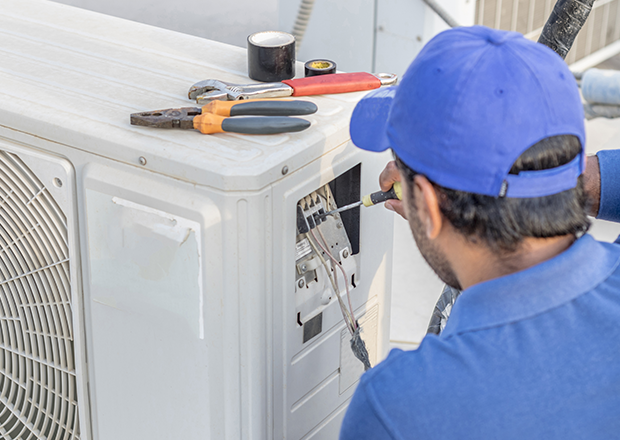
Essential tools for HVAC job include multimeters, refrigerant gauges, monkey wrench, air pump, and leakage detectors. These tools allow service technicians to diagnose, repair, and useful reference maintain heating, air, and air flow conditioning systems effectively and successfully.
Can I Function in Heating And Cooling Without Certification?
Yes, one can function in heating and cooling without certification, although chances might be limited. Numerous companies choose licensed prospects, and people without certification may locate it challenging to advancement in their jobs or access specific work settings.
To succeed in the HVAC market, individuals should go through specific training and obtain appropriate accreditations that confirm their skills and understanding. Commonly, striving HVAC experts begin with a high college diploma or matching, followed by occupation training or an associate degree in Heating and cooling innovation. With the required training and qualifications in from this source place, individuals can discover various job paths within the A/c market. According to industry reports, the employment of Heating and cooling professionals is predicted to expand significantly over the next decade, showing the sector's strength also during financial variations. Yes, there are customized Cooling and heating areas, including residential, business, and industrial HVAC, as well as areas like refrigeration, power management, and interior air high quality.